Historical Novels and Dramas Across Reincarnation Cycles
- reincarnation • moral causality (the law of action and reaction (karma)) • continuity of consciousness (after death) • reincarnation planning • free will and responsibility • reparation and forgiveness • family and emotional bonds • materialism/consumerism • immediate pleasure vs meaning in life • ethical dilemmas under pressure
The works in this catalogue are historical novels and dramas with spiritual repercussions, structured by reincarnation cycles and by a logic of moral causality (the law of action and reaction (karma)). From an editorial standpoint, this is fiction centred on human relationships—family, maturation, and choices under pressure—shaped by a metaphysical layer that broadens the scope of conflict and its consequences.
The distinctive strength of this body of work lies in its chain-built plotting. Each era and setting functions as consequence: bonds reappear, conflicts change form, and the reader follows the moral cost of decisions over time. The contrast between materialism/consumerism and meaning in life sustains part of the tension, with close attention to the clash between immediate pleasure and responsibility.
For international acquisition: spiritual fiction / metaphysical drama, with potential to segment by lines (historical, contemporary, and YA), while maintaining thematic unity and a consistent voice.
SANDRA CARNEIRO — THE AUTHOR
Sandra Carneiro (Brazil, 1963) lives in Atibaia, in the state of São Paulo. She works as a psychographic medium and began this activity in childhood, writing children’s literature.
We have assembled 10 published works, with commercial circulation through Viva Luz and reported sales of more than 220,000 copies.
Editorially, her work brings together historical novels and contemporary dramas structured by reincarnation cycles, the law of action and reaction (karma), and human conflict in realistic settings. The result combines emotional scale with moral consequence, with plots that move across eras, bonds, and choices until they reach reparation and inner reconstruction. For international acquisition: spiritual fiction / metaphysical drama.
JOSÉ BENTO — SPIRIT AUTHOR (as presented)
José Bento is a spirit author (as presented) focused on a young audience. Under his signature, YA novels of spiritual realism unfold at an adventure pace, following a protagonist who moves “between two worlds” and becomes involved in experiences of assistance and learning.
Editorially, the novels signed by José Bento privilege choices and consequences (reincarnation cycles, karmic bonds, reincarnation planning). They connect everyday dilemmas and family ties to a metaphysical layer of moral responsibility and maturation.
Within this thematic scope, the YA line works with structuring dilemmas in the characters’ moral development, keeping human conflict at the centre of the narrative and the spiritual dimension as an axis of consequence and reconstruction.
EDITORIAL AXES (YA line)
- YA spiritual realism • adventure pace • “between two worlds” • choices and consequences • karmic bonds • reincarnation planning • family and belonging • moral maturation
INTRODUCTION — TRILOGY OF LIGHT (Trilogia da Luz)
The Trilogy of Light is a YA series of spiritual realism. It follows young people in the contemporary world—anxieties, dreams, virtues, and contradictions—within a multicultural and technological society marked by tensions between family values and social pressure around appearance, consumption, and belonging.
The plots explore the pursuit of sensations and immediate pleasure as the surface of deeper conflicts. They bring together questions of identity, emotional crisis, and strained family relationships. In a coming-of-age key, the characters face high-impact choices and their effects on everyday life.
The narrative architecture links the “visible world” to the spiritual dimension, emphasising the law of action and reaction (karma), reincarnation cycles, and continuity of consciousness (after death) as a structure of consequence and remaking. In the central arc, Serginho narrates his trajectory of learning and service, interacting with bonds among the incarnate and the discarnate, connecting the present to a karmic past.
EDITORIAL AXES (Trilogy of Light)
- YA spiritual realism • adventure pace • youth and choices • immediate pleasure vs meaning in life • family and belonging • the law of action and reaction (karma) • continuity of consciousness and interaction between planes • moral maturation
The YA line treats contemporary moral dilemmas as dramatic engines of the coming-of-age arc.
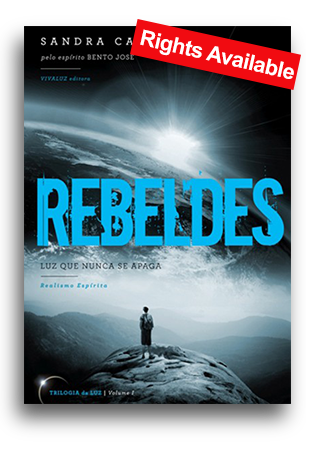
Rebels (Rebeldes — Trilogy of Light, Book 1, 2003)
MINIMUM TECH SHEET
Author (psychography): Sandra Carneiro • Spirit author (as presented): José Bento
Year: 2003 • Publisher: Viva Luz • Extent: 280 pages
Reported data: sales: 14,000
WORK PRESENTATION
First volume of the series, Rebels introduces Serginho, an urban teen with an ambivalent profile, whose routine revolves around music, school, sports, and an impulsive social life. Alongside Paula, his girlfriend, the plot weaves immediate pleasure, family tensions, and risk-taking until a breaking point shifts the narrative into an experience “between two worlds”, activating the axis of choices and consequences.
From that shift onward, the story emphasises moral consequences, guilt/conscience, and reconstruction, with spiritual support and learning processes in the spiritual plane, connecting family, emotional bonds, and personal responsibility.
INTERNAL STRUCTURE
- Teen everyday life → rupture / existential turning point
- “Between two worlds” experience (physical world / spiritual plane)
- Recognition of mistakes → reorientation and training for assistance
CONCEPTUAL DIMENSION
A spiritual coming-of-age YA novel: a passage from recklessness to responsibility, structured by choices and their moral effects.
STYLE AND LANGUAGE
YA narrative at an adventure pace, focused on affective conflicts and dramatic turns.
INTERNATIONAL POTENTIAL
YA spiritual fiction / metaphysical coming-of-age; afterlife & reincarnation narratives.
The thematic axis—choices, consequences, and moral reconstruction—has universal resonance.
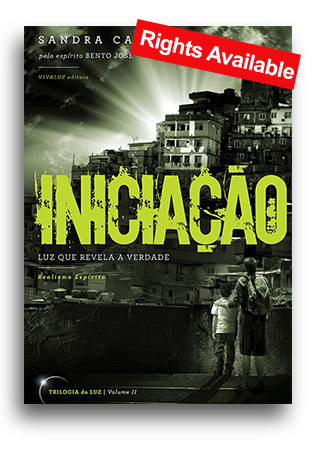
Initiation (Iniciação — Trilogy of Light, Book 2, 2008)
MINIMUM TECH SHEET
Author (psychography): Sandra Carneiro • Spirit author (as presented): José Bento
Year: 2008 • Publisher: Viva Luz • Extent: 272 pages
Reported data: sales (to Jul/2017): 23,000
WORK PRESENTATION
In the second volume, Serginho is already living the condition of being “between two worlds” and, after a cycle of learning, receives his first mission: to assist Paulo, a sick and fragile boy, in a high-risk situation in earthly life. The work is carried out alongside Lívia, connected to relief and care.
The book deepens the logic of moral causality in reincarnation cycles and the relationship between everyday life and the presence of spirituality, with reference to reincarnation planning and ethical reorientation.
INTERNAL STRUCTURE
- Post-learning → mission of assistance (a person at risk)
- Cooperation with spiritual guides / allies
- Overcoming personal limitations for the sake of another
CONCEPTUAL DIMENSION
YA fiction of “mission and service”: maturation through care, with emphasis on responsibility, reparation, and consequences.
STYLE AND LANGUAGE
YA prose oriented by a mission-plot, presenting spiritual mechanisms clearly without abandoning dramatic conflict.
INTERNATIONAL POTENTIAL
Spiritual YA; metaphysical drama; “guide/guardian” narratives; fiction about care, adversity & purpose.
The thematic axis—service, responsibility, and moral causality—has universal resonance.
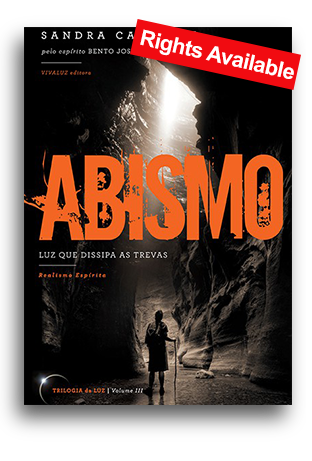
Abyss (Abismo — Trilogy of Light, Book 3, 2012)
MINIMUM TECH SHEET
Author (psychography): Sandra Carneiro • Spirit author (as presented): José Bento
Year: 2012 • Publisher: Viva Luz • Extent: 280 pages
WORK PRESENTATION
In the third volume, Serginho reunites with Paula, his former girlfriend, now in adverse circumstances on the spiritual plane. The conflict shifts into a journey of rescue and responsibility, in which the protagonist must face fears, review patterns of choice, and sustain an attempt at a new beginning for her.
The book expands the horizon of consequences by connecting emotional bonds, dynamics of imprisonment through affinities, and the possibility of reparation, with reference to new reincarnation cycles and readjustments in family ties.
INTERNAL STRUCTURE
- Search and reunion (Paula) → move into a hostile environment on the spiritual plane
- Confrontation with dynamics of imprisonment through dependencies / emotional affinities
- The protagonist’s ethical trial: courage, responsibility, and overcoming patterns
- Horizon of a new beginning: reparation and reincarnation
CONCEPTUAL DIMENSION
Explores bonds by affinity and cycles of repetition: repeated choices can intensify forms of imprisonment, while transformation opens the way to reparation and growth.
STYLE AND LANGUAGE
YA novel at an adventure pace, with a darker atmosphere in this volume, sustained by moral conflict and dramatic turns.
INTERNATIONAL POTENTIAL
YA spiritual fiction / metaphysical adventure; afterlife journey; redemption-and-rescue arc.
The thematic axis—responsibility, reparation, and a new beginning—has universal resonance.
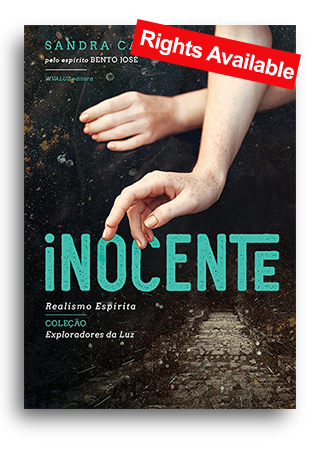
Innocent (Inocente — Explorers of Light Collection, Book 4 / post–Trilogy of Light, 2017)
MINIMUM TECH SHEET
Author (psychography): Sandra Carneiro • Spirit author (as presented): José Bento
Year: 2017 • Publisher: Viva Luz • Extent: 280 pages
Reported data: sales (to Jul/2017): 3,000
WORK PRESENTATION
After the three volumes of The Trilogy of Light, Serginho continues training in a spiritual colony and returns to the physical world for a new challenge: to assist Renato, his best friend and the musician from their former band, amid a teenage and family crisis with high moral repercussions.
The book introduces Benedita, Renato’s grandmother, acting as a protective figure on the spiritual plane and seeking support from spiritual guides, in a narrative that sets free will, responsibility, and consequences in tension—keeping the “between two worlds” axis as the engine of action.
INTERNAL STRUCTURE
- Assistance mission in the physical world (a friend in crisis)
- Spiritual support network (protective figure / guides) versus impulsive decisions
- Teenage and family dilemma with moral and existential repercussions
CONCEPTUAL DIMENSION
Deepens the youth question of responsibility and choice, connecting the central dilemma to the logic of action and reaction and to reincarnational bonds.
STYLE AND LANGUAGE
YA “mission” format, with a central moral conflict and consequence-driven progression.
INTERNATIONAL POTENTIAL
YA spiritual fiction; metaphysical coming-of-age; ethical-decision drama with spiritual layer.
The thematic axis—responsibility, free will, and consequences—has universal resonance.
LUCIUS — SPIRIT AUTHOR (as presented)
The novels attributed to Lucius (as presented) are expansive historical novels and spiritually consequential dramas, structured by reincarnation cycles and by a logic of moral causality (the law of action and reaction (karma)). The body of work spans multiple periods and settings, tracing how emotional bonds, rivalries, and personal choices reverberate over time through responsibility, reparation, forgiveness, and rebuilding.
From an editorial standpoint, Lucius’ novels operate on three integrated layers: (1) historical saga shaped by social and religious tensions; (2) family and relationship drama driven by psychological and moral dilemmas; and (3) a metaphysical layer that provides a consequence-driven framework (reincarnation planning, free will, the assistance of a spirit protector (guardian angel), and moral persecution/obsession dynamics). In some titles, this architecture expands into larger-scale spiritual cosmology, with collective and civilisational implications.
For international acquisition: historical spiritual drama / metaphysical epic fiction — historical and contemporary narratives in which universal conflicts (relationships, family, social inequality, and materialism) are articulated through journeys of inner transformation.
KEY THEMES (editorial axes)
- historical sagas and moral dramas across reincarnation cycles
- reincarnation and reincarnation planning
- the law of action and reaction (karma), free will, and responsibility
- reparation and forgiveness; rebuilding of bonds
- marriage, family, and marital rupture
- the female sphere and social tensions (inequality, oppression, exclusion)
- materialism/consumerism, passions, and conflicts of desire
- spiritual assistance (spirit protector) and moral persecution/obsession dynamics

Exiles for Love (Exilados por Amor, 2007)
EDITORIAL CLASSIFICATION
Epic spiritual fiction • Spiritual cosmology • Planetary transmigration (exile/banishment) • Moral-causality drama (the law of action and reaction (karma))
MINIMUM TECH SHEET
Author (psychography): Sandra Carneiro • Spirit author (as presented): Lucius
Year: 2007 • Publisher: Viva Luz • Extent: 569 pages
Reported data: sales (to Jul/2017): 84,000
CONTEXT / HISTORICAL FRAME
Narrative set in remote time (millions of years), on a planet presented as Capella, 42 light-years from Earth, with a technologically advanced and morally heterogeneous society.
WORK PRESENTATION
Exiles for Love opens Lucius’ cycle of novels with a large-scope saga, combining spiritual cosmology, civilisational conflict, and moral causality. The plot begins from the contrast between technological advance and the persistence of egoism and arrogance in part of the collective, shaping a broad social and ethical drama.
One central axis is the planetary transmigration of spirits: the novel explores exile and banishment as the destiny of “exiled” consciousnesses, associated with the image of “fallen angels”. In this framework, exile functions as a dramatic and moral engine: displacement, loss of position, civilisational shock, and ethical rebuilding—always under the law of action and reaction (karma).
The narrative also enters into dialogue with biblical references (such as the idea of “many dwelling places”) to support the hypothesis of multiple inhabited worlds and different stages of the evolution of consciousness. It thereby organises a path of fall, displacement, and collective learning, articulating free will, consequences, and the possibility of reparation.
INTERNAL STRUCTURE
- Collective saga within an advanced yet morally unequal society
- Ethical conflict: pride and power disputes versus moral responsibility
- Spiritual cosmology: multiple worlds, evolution of consciousness, and transmigration of spirits
- Dramatic axis: exile/banishment → civilisational shock → moral reconstruction
CONCEPTUAL DIMENSION
A moral-cosmology novel: a remote scenario is used to discuss responsibility, freedom, and the ethical repercussions of decisions at collective scale, with emphasis on exile, reparation, and inner transformation.
STYLE AND LANGUAGE
Saga prose with broad scope (world, collective, civilisational conflict) and explanatory elements integrated into the plot to support the presented metaphysical universe.
INTERNATIONAL POTENTIAL
Metaphysical epic fiction • Spiritual cosmology • Exile narrative • Moral-causality saga.
The thematic axis—exile, moral responsibility, and the consequences of choices at collective scale—has universal resonance.

The Angels’ Journey (Jornada dos Anjos, 2010)
EDITORIAL CLASSIFICATION
Epic spiritual fiction • Multi-era historical saga • Spiritual cosmology (Capella) • Moral-causality drama (the law of action and reaction (karma))
MINIMUM TECH SHEET
Author (psychography): Sandra Carneiro • Spirit author (as presented): Lucius
Year: 2010 • Publisher: Viva Luz • Extent: 569 pages
Reported data: sales (to Jul/2017): 84,000
CONNECTION TO THE PREVIOUS WORK
The Angels’ Journey continues Exiles for Love, following the evolutionary trajectory of the group of consciousnesses originating from the planet Capella and their path of exile/readjustment on Earth.
WORK PRESENTATION
The novel deepens the theme of exile/banishment, using the image of “fallen angels” as a metaphor for intellectually advanced yet morally delayed consciousnesses who restart reincarnation cycles on a primitive Earth. In this framing, exile operates as an ethical and civilisational engine: clash of values, loss of position, and moral reconstruction under the law of action and reaction (karma).
A distinctive editorial feature is the organisation of the saga by recognisable historical milestones—among them the reincarnation of Constantine (306 CE), with repercussions for early Christianity and its institutionalisation as a structure of power.
In its final part, the narrative moves into contemporary settings (Brazil and New York, 1997) and highlights a major international event as a point of dramatic tension. In the character arc, the novel follows a long-duration clash between two scientists, crossing centuries and reconfiguring rivalries and choices until they can be converted into reparation and reconstruction.
INTERNAL STRUCTURE
- Continuity of the Capella saga: exile/banishment → primitive Earth → successive reincarnations
- Recurring moral conflict: vengeance/hatred versus ethics, reparation, and forgiveness
- Multi-era historical saga: different eras connected by characters and consequences
- Transformation vector: fall → learning → service and assistance to others
CONCEPTUAL DIMENSION
A collective-scale moral-causality saga: spiritual cosmology, exile, and reincarnation cycles discuss freedom, responsibility, and consequence, linking inner transformation to widely recognised historical milestones.
STYLE AND LANGUAGE
Saga prose with broad historical scope and chain-built plotting (characters reappear across eras), combining personal drama and civilisational context.
INTERNATIONAL POTENTIAL
Metaphysical epic fiction • Historical multi-era saga • Spiritual cosmology • Exile narrative.
The thematic axis—exile, historical milestones, and moral transformation across multiple lives—has universal resonance.

Rebirth of Hope (Renascer da Esperança, 2016)
EDITORIAL CLASSIFICATION
Historical novel (19th century) • Spiritual drama • Religion vs science conflict • Moral causality and reincarnation planning
MINIMUM TECH SHEET
Author (psychography): Sandra Carneiro • Spirit author (as presented): Lucius
Year: 2016 • Publisher: Viva Luz • Extent: 388 pages
Reported data: sales (to Jul/2017): 20,000
CONTEXT / HISTORICAL FRAME
Spain, second half of the 19th century, set in the cities of Barcelona and Bilbao. The period is described as one of scientific ferment under Enlightenment influence, in tension with religious dogmas and power structures associated with aristocracy and monarchy.
WORK PRESENTATION
The novel follows the drama lived by the French medium Emilie in a predominantly conservative society shaped by disputes between emerging science and institutional religion. In this context, the book presents the arrival and circulation of spiritual ideas and research originating in France, generating opposition from conservatism and, at the same time, growing interest.
It revisits dogmas and religious debates, articulating reincarnation, justice, and love as axes of karmic cycles, as well as reincarnation planning and bonds between people across successive lives—relationships of affinity or relationships driven by the need for forgiveness and readjustment.
The assistance of a spirit protector (guardian angel) is also emphasised and, in counterpoint, moral persecution/obsession dynamics associated with cycles of vengeance and refusal of forgiveness, keeping free will and consequence as engines of conflict.
INTERNAL STRUCTURE
- Period novel with socio-political and religious context
- Central tension: scientific/Enlightenment advance versus dogma and conservatism
- Metaphysical layer: reincarnation, planning, bonds, and readjustments
- Dramatic vector: spiritual protection versus moral persecution; vengeance versus forgiveness
CONCEPTUAL DIMENSION
A historical moral-causality drama: the period functions as a stage to discuss freedom, responsibility, and inner transformation, linking social conflict to cycles of consequence and the possibility of reparation.
STYLE AND LANGUAGE
Historical narrative in a dramatic register, with the pace of a period novel and constant moral conflict, integrating conceptual elements into plot development.
INTERNATIONAL POTENTIAL
Historical spiritual drama • Period novel (religion vs science) • Moral-causality narrative.
The thematic axis—period conflict, moral causality, and reconciliation—has universal resonance.

Déjà Vu: An Invitation to Awaken (Déjà Vu — Um Convite para Despertar, 2018)
EDITORIAL CLASSIFICATION
Contemporary drama • Past-life investigation • Pharmaceutical science/industry vs meaning in life • Historical thread (18th century): alchemy and the origins of pharmacology
MINIMUM TECH SHEET
Author (psychography): Sandra Carneiro • Spirit author (as presented): Lucius
Year: 2018 • Publisher: Viva Luz • Extent: 360 pages
WORK PRESENTATION (3 paragraphs)
Karen is a pragmatic and sceptical scientist, Head of Research and Development at a multinational pharmaceutical company. When her daughter becomes seriously ill, the shock breaks the logic of control that sustains her life and shifts the novel into a direct conflict between performance, safety, and meaning.
A turning point occurs during a trip to Northern Ireland, when Karen undergoes hypnosis/memory regression. The investigation reopens an earlier existence in the eighteenth century (1760), in which she recognises herself as James Stuart, involved in studies of alchemy applied to the preparation of medicines—a historical axis the book uses as a bridge to discuss mindsets and choices that run through modern science.
Between the corporate present and the revealed past, the novel builds a “paradigm-break” arc: what seemed like a personal crisis becomes a revision of values, responsibilities, and choices. The past does not enter as curiosity, but as a dramatic engine that reorganises affects, priorities, and the understanding of what healing means—in the body and in consciousness.
INTERNAL STRUCTURE
- Family crisis → rupture of certainties and the control-based life model
- Investigative trigger (travel + regression) → opening the past-life line
- Historical thread (18th century) → alchemy and medicine-making as thematic axis
- “Science vs meaning” confrontation → ethical and affective reorientation
- Inner transformation → choices and consequences as arc closure
CONCEPTUAL DIMENSION
A values-revision drama: the investigation of a previous existence confronts rationality, ethics, and meaning, shifting the protagonist from defensive pragmatism to a broader responsibility—affective, moral, and existential.
STYLE AND LANGUAGE
Contemporary prose with a high-concept construction (trigger, revelation, and progressive reinterpretation), alternating emotional tension and gradual discovery. The historical thread expands thematic reach without replacing the central human conflict.
INTERNATIONAL POTENTIAL
High-concept metaphysical drama • Past-life investigation • “science vs meaning” narrative • Contemporary family drama with historical thread.
The thematic axis—crisis, discovery, and the reconstruction of values—has universal resonance.
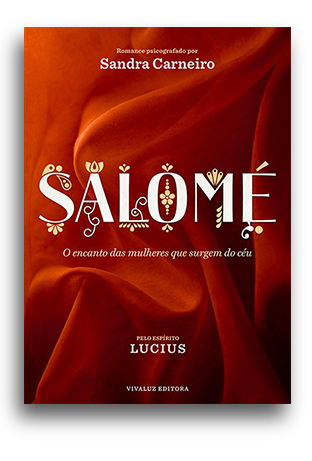
Salomé: The Enchantment of Women Who Appear in the Sky (Salomé — O Encanto das Mulheres que Surgem no Céu, 2019)
EDITORIAL CLASSIFICATION
Contemporary drama • women’s sphere (career, motherhood, marriage, family) • cultural conflict and gender inequality • spiritual realism and inner transformation
MINIMUM TECH SHEET
Author (psychography): Sandra Carneiro • Spirit author (as presented): Lucius
Year: 2019 • Publisher: Viva Luz • Extent: 448 pages
WORK PRESENTATION
Salomé articulates two complementary narrative axes. In the first, it follows Western women facing contemporary pressures—balancing career, motherhood, and marital life—and conflicts associated with social expectations, emotional crisis, and family rearrangements.
In the second axis, the novel brings the reader closer to the reality of Afghan women subjected to strong repression and inequality, placing issues of violence, exclusion, and social control at the centre of the drama. The contrast between contexts functions as the ethical engine of the plot, expanding the debate on freedom, dignity, and possible choices within different cultural structures.
The metaphysical layer operates as an axis of consequence and transformation: boundary experiences, bonds, and decisions produce moral repercussions and propel journeys of inner reconstruction, keeping the focus on human experience and the female condition.
INTERNAL STRUCTURE
- Two narrative lines (West vs Afghanistan) in contrast
- Dilemmas in the women’s sphere: career, motherhood, marriage, family
- Gender inequality and violence as dramatic tension
- Moral repercussions and inner transformation as the character-arc axis
INTERNATIONAL POTENTIAL
Women’s fiction • Social drama • Contemporary spiritual realism.
The thematic axis—the female condition, cultural conflict, and inner reconstruction—has universal resonance.

All the Flowers I Received (Todas as Flores Que Eu Ganhei, 2017)
EDITORIAL CLASSIFICATION
Three-timeframe historical novel • marital and family drama • moral-causality fiction (the law of action and reaction (karma)) • reincarnation plot with spiritual guardianship (spirit protector)
MINIMUM TECH SHEET
Author (psychography): Sandra Carneiro • Spirit author (as presented): Lucius
Year: 2017 • Publisher: Viva Luz • Extent: 380 pages
Reported data: sales (to Jul/2017): 20,000
CONTEXT / HISTORICAL FRAME
Salzburg, Austria — 1718 • India — new incarnation (period not specified) • contemporary Brazil
WORK PRESENTATION (3 paragraphs)
The narrative is organised across three historical times linked by emotional bonds and consequences, following Sofia and her family group from aristocratic Salzburg in 1718—where marriage alliances are negotiated as instruments of prestige and interest under religious tension—towards reunions in new existences.
The thematic axis is moral causality: decisions taken under pride, passion, and material interest reverberate as processes of readjustment, with emphasis on reincarnation planning and the presence of spiritual guardianship. The work contrasts persistent moral persecution (in obsession/persecution dynamics) with the path of forgiveness as a mechanism of inner liberation. In dramatic terms, it articulates guilt and reparation, persistent persecution, and programmed reunions as engines of transformation.
On the human plane, the novel concentrates on the conflict between desire and responsibility: affective choices reopen debts, reconfigure ties, and require self-control so that characters can pass through successive trials without repeating patterns of vanity, egoism, and imbalance. The spirit protector’s action appears as discreet assistance, always subordinate to free will.
INTERNAL STRUCTURE
- Three historical times connected by bonds and consequences
- Marital/family conflict with ethical dilemmas
- The law of action and reaction (karma) and reincarnation planning as plot architecture
- Materialism and passions as vectors of fall and reparation
- Spiritual guardianship (spirit protector) and moral persecution; forgiveness as a closing vector
CONCEPTUAL DIMENSION
A moral-formation fiction in a reincarnational key: the three stages function as a learning structure in which responsibility and reparation reorder bonds and redefine ethical identity over time.
STYLE AND LANGUAGE
Linear progression between eras, focused on causal chaining and an objective presentation of spiritual elements, without depending on extensive doctrinal explanation.
INTERNATIONAL POTENTIAL
Historical multi-era drama • Metaphysical moral-causality fiction • Family/relationship saga • Reincarnation-driven narrative.
The thematic axis—affective choices and consequences over time—has universal resonance.