THE TEMPLE TRILOGY
The Saga of the Temple of Jerusalem, the Initiatic Tradition, and Masonic Legends
Initiatic historical fiction • Philosophical novel • Epic-scale symbolic narrative
Over more than two millennia, a single symbol has crossed civilisations, empires, and ruins: the Temple.
Built as a house of the Covenant, destroyed by war, rebuilt as hope, transfigured into an ideal of chivalry, and finally turned into an inner metaphor—the Temple remains a persistent image of the human search for order, meaning, and transcendence.
The Temple Trilogy, by José Rodrigues Trindade (Zé Rodrix), is one of the most ambitious projects of historical-initiatic fiction in contemporary Brazilian literature. With more than two thousand pages of continuous narrative, the work travels from the 10th century BCE to the early 14th century, weaving biblical tradition, Templar memory, architectural symbolism, and medieval political drama.
Although Brazil’s initiatic literary tradition is still little known in major international publishing circuits, The Temple Trilogy offers narrative structure, historical density, and symbolic breadth comparable to major European historical-philosophical sagas—positioning itself as a work of universal vocation rather than a regional production.
Distributed across three major historical arcs, the saga covers:
- The construction of Solomon’s Temple (c. 970–960 BCE), under the reign of David’s son, fulfilling the spiritual dream of the unified Kingdom of Israel;
- The rebuilding of the Temple after the Babylonian exile (6th century BCE), under the leadership of Zerubbabel, upon the return to a devastated Jerusalem;
- Medieval Europe from the 12th to the 14th centuries, in the environment of the great Gothic cathedrals—especially the Parisian context between the building of Notre-Dame (1163–1345) and the fall of the Order of the Knights Templar (1307–1314).
More than reconstructing historical episodes, the trilogy investigates the civilisational process through the metaphor of the sacred building. The hewn stone, the construction site, the discipline of the craft, the hierarchy of builders, the fraternity of knights, and the clash between spiritual power and temporal power become symbolic expressions of the individual’s ethical formation.
In the third volume, set within the world of medieval building guilds, the narrative dialogues with the historical tradition that would give rise to so-called operative Freemasonry, linking architectural tradition, initiatic symbolism, and the political drama of Philip IV of France’s persecution of the Templars—culminating in the tragic figure of Jacques de Molay.
Throughout the saga, the Temple is simultaneously:
- a physical space
- a political ideal
- a historical institution
- an initiatic symbol
- a metaphor for the forming human conscience
The work does not present itself as doctrinal or institutional writing. It is literature—literature that uses mythic and initiatic heritage as narrative language to explore universal themes:
- inner building and moral self-improvement
- leadership and historical responsibility
- identity and belonging
- ethics, power, and corruption
- fidelity, sacrifice, and spiritual maturity
In the preface to Volume III, writer Luis Eduardo da Mata states:
“Never, in the entire course of Brazilian literature, has a writer ventured with such obstinacy into a monumental epic saga as is the case with this trilogy, which examines the origins of Freemasonry—one of the oldest initiatic fraternities in the world—blending erudition with fluency, where reality and fiction merge into an incredible narrative mosaic. The Temple Trilogy was among the most fantastic literary works produced in Brazil in the first decade of the 21st century.”
This assessment captures its scope: not merely a historical reconstruction, but a literary architecture that turns symbolic tradition into universal ethical reflection.
By its temporal breadth, philosophical density, and consistent documentary basis, The Temple Trilogy fits within international segments such as:
- Large-scale Historical Fiction
- Philosophical Novel
- Symbolic Literature
- Initiatic Narrative
- Fiction grounded in Templar tradition and Masonic imagery
This is not only the story of sacred buildings.
It is the story of the building of the human being.
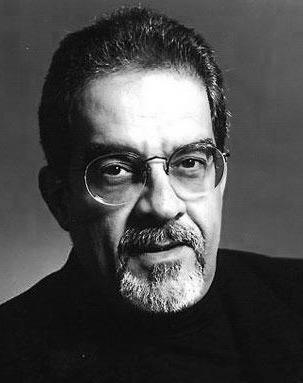
ZÉ RODRIX — THE AUTHOR
José Rodrigues Trindade (1947–2009), known artistically as Zé Rodrix, was one of the most singular intellectual figures in contemporary Brazilian culture.
Nationally recognised for his career in music, advertising, and communications, Rodrix stood out as a composer with strong poetic craft, rhythmic command of language, and symbolic refinement. His musical work revealed an author attentive to the word, metaphor, and image-making—traits that would migrate naturally into his literary production.
Alongside his artistic career, he developed over decades a consistent body of historical study and philosophical reflection, which would culminate in the creation of The Temple Trilogy.
A descendant of a family with Masonic tradition, he was initiated into Freemasonry in 1991 at the Augusta and Respectable Symbolic Lodge Apostles of the Temple No. 241, under the jurisdiction of the Grand Masonic Lodge of the State of São Paulo. He progressed through the symbolic degrees and deepened his study of the so-called philosophical degrees of the Ancient and Accepted Scottish Rite, reaching the 32nd Degree.
His initiatic experience was not limited to ritual formality. Rodrix dedicated himself to systematic study:
- biblical sources concerning the Temple of Jerusalem
- the historical tradition linked to the Order of the Knights Templar
- the symbolic formation of Masonic legends
- the moral philosophy underlying initiatic traditions
The Temple Trilogy arises from the convergence of three fundamental vectors in his trajectory:
- real initiatic experience
- documented historical investigation
- mature poetic sensibility
His writing combines epic structure with narrative cadence, documentary rigour with symbolic density.
Rodrix’s musical formation lends rhythm, image-building, and dramatic tension to the narrative—giving the work not only historical content, but atmosphere and a distinctive voice.
Rodrix did not produce institutional or apologetic literature.
His approach is literary, symbolic, and universal.
By transforming initiatic tradition into large-scale historical fiction, he combined research, philosophy, and poetry in a rare synthesis—making The Temple Trilogy not only a historical saga, but a work of enduring ethical and aesthetic resonance.
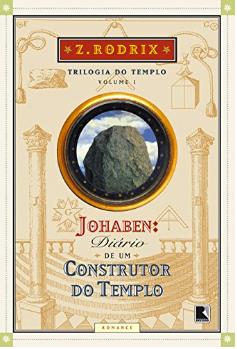
JOABEM: The Diary of a Builder of the Temple (Joabem — O Diário de um Construtor do Templo, 1999)
Volume I of The Temple Trilogy
Author: Z. Rodrix
Year: 1999 • Publisher: Record • Extent: 448 pages
Epic historical fiction • Coming-of-age novel • Symbolic narrative
HISTORICAL PERIOD
10th century BCE — approximately 970–931 BCE, during Solomon’s reign, at the height of the consolidation of the Kingdom of Israel.
WORK PRESENTATION
Set in biblical Jerusalem, the novel recreates the construction of the First Temple—built to house the Ark of the Covenant and to symbolically seal the union between the Hebrew people and Yahweh.
The narrative does not begin from the throne, but from the ground of the worksite.
Joabem, a young apprentice recruited to work in the mines and quarries destined for the Temple’s construction, narrates his trajectory in the first person. The reader follows the extraction of stones, the transport of cedars from Tyre, the hierarchical organisation of the building yards, and the technical and spiritual atmosphere surrounding the project conducted under Solomon’s reign—the fulfilment of King David’s dream.
The stone must be cut with absolute precision while still in the quarry. Nothing is adjusted later.
This constructive principle becomes the novel’s symbolic axis.
DRAMATIC STRUCTURE
The work articulates three layers simultaneously:
Historical reconstruction of Solomon’s Temple.
The technical and ethical formation of a young builder.
The inner building of the human being as a universal metaphor.
As the Temple rises, Joabem faces his own conflicts: ambition, pride, fear, the desire for recognition, loyalty, and responsibility. Architectural discipline becomes moral discipline.
The novel turns one of antiquity’s great architectural enterprises into a narrative of human formation.
SYMBOLIC DIMENSION
Without doctrinal character, yet supported by consistent historical research, the book presents the Temple as a universal archetype:
- the rough stone represents character in formation
- precise cutting symbolises moral self-improvement
- the hierarchy of crafts reflects merit and responsibility
- the fraternity of builders expresses human interdependence
The tradition linked to the Master Builder Hiram Abiff appears as a cultural and symbolic element that would cross centuries within Western imagination.
STYLE AND LANGUAGE
Narrated in the first person, the novel combines:
- psychological intensity
- imagistic, cadenced language
- tension between historical epic and introspection
- philosophical density integrated into action
The prose reveals a strong poetic vein without losing narrative fluency.
INTERNATIONAL POTENTIAL
The book speaks to readers of:
- historical fiction set in antiquity
- coming-of-age novels
- symbolic literature
- large-scale epic narratives
- works exploring biblical tradition and Middle Eastern history
Its thematic axis—outer construction as a metaphor for inner construction—is universal, transcending cultural borders and resonating with markets interested in historical narratives with philosophical depth.
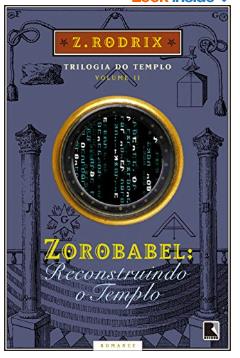
ZERUBBABEL: Rebuilding the Temple (Zorobabel — Reconstruindo o Templo, 2007)
Volume II of The Temple Trilogy
Author: Z. Rodrix
Year: 2007 • Publisher: Record • Extent: 642 pages
Historical fiction with initiatic symbolism • Philosophical novel • Symbolic narrative
HISTORICAL PERIOD
6th century BCE — approximately 538–515 BCE, after the decree of Cyrus, King of Persia, authorising the return of the Hebrews from Babylonian exile and the rebuilding of the Temple in Jerusalem.
WORK PRESENTATION
If the first volume narrates the splendour of construction under Solomon, Zerubbabel: Rebuilding the Temple plunges into the time of ruin.
Jerusalem has been devastated.
The Temple has been destroyed.
The people have been dispersed.
Decades later, under Persian rule, the exiles begin to return. At the head of this movement stands Zerubbabel—heir to the Davidic line and political leader of a community weakened, yet not defeated.
The mission now is not to raise something grand from abundance.
It is to rebuild from loss.
HISTORICAL CONFLICT
The novel is set at a decisive moment in the history of the ancient Middle East: the post–Babylonian exile period, when identity, faith, and social organisation must be reconstructed under imperial surveillance.
The Second Temple is born:
- under material scarcity
- under internal political tensions
- under opposition from neighbouring peoples
- under the idealised memory of former glory
Comparison with Solomon’s Temple is inevitable—and painful.
And it is precisely in this contrast that the work’s dramatic strength resides.
PHILOSOPHICAL AXIS
If Joabem deals with the construction of individual conscience, Zerubbabel deals with the reconstruction of collective identity.
The novel deepens themes such as:
- rebuilding after collapse
- leadership under adversity
- memory versus historical reality
- fidelity to principles in complex political contexts
- spiritual endurance amid instability
Here, the Temple becomes a metaphor for something even subtler:
not only the building of character,
but the rebuilding of dignity after historical failure.
SYMBOLIC AND INITIATIC DIMENSION
In this volume, the symbol becomes more mature.
The stone no longer represents only discipline—
it represents resilience.
The work dialogues with initiatic tradition by presenting rebuilding as an essential stage of the formative process: every true construction passes through the trial of loss.
The rebuilt Temple symbolises:
- continuity of tradition
- preservation of identity
- spiritual maturity
- historical fidelity
INTERNATIONAL POTENTIAL
Zerubbabel: Rebuilding the Temple speaks to readers and markets interested in:
- historical fiction set in the ancient Middle East
- exile-and-return narratives
- cultural and spiritual reconstruction
- political leadership dramas under empire
- symbolic literature with ethical density
Its central theme—rebuilding after destruction—has universal and contemporary resonance, increasing its international potential.
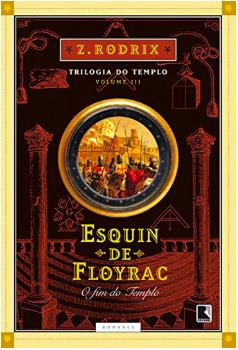
ESQUIM DE FLORIAC: The End of the Temple (Esquim de Floriac — O Fim do Templo, 2007)
Volume III of The Temple Trilogy
Author: Z. Rodrix
Year: 2007 • Publisher: Record • Extent: 656 pages
Initiatic historical fiction • Political novel • Medieval symbolic drama
HISTORICAL PERIOD
13th–14th centuries — approximately 1307–1314, in the context of medieval Paris under the reign of Philip IV of France (“the Fair”), during the persecution and fall of the Order of the Knights Templar.
WORK PRESENTATION
If the first two volumes address the building and rebuilding of the Temple, this third narrative arc deals with its historical fall and its symbolic transfiguration.
The Order of the Knights Templar—one of the most powerful and financially structured institutions of medieval Europe—becomes a direct target of the political ambition of King Philip IV, allied with the papacy. Controlling strategic routes, priories, and vast resources distributed between East and West, the Templars represented not only spiritual and military force, but also economic power capable of rivaling monarchies.
At the centre of the narrative stands Jacques de Molay, the last Grand Master of the Order.
At his side—and not against him—stands Esquim de Floriac.
Historically associated with the denunciation that precipitated the Templars’ downfall, Esquim is reinterpreted by Rodrix through a more complex dramatic lens: not as an opportunistic traitor, but as a man of absolute trust to Molay, charged with infiltrating the French court.
“Betrayal” thus takes on a strategic dimension.
Appointed by the Grand Master himself, Esquim accepts becoming a double agent alongside the Order’s greatest enemy—King Philip “the Fair”—in a last attempt to understand, delay, or contain the political machinery moving against the Temple.
HISTORICAL CONFLICT
The novel is set at the decisive moment of the Order’s dissolution:
- the political offensive of the French monarchy
- the instrumentalisation of papal power
- the inquisitorial process led by Guillaume de Paris
- the formal accusations and simultaneous arrests of 13 October 1307
- the tension between royal sovereignty and spiritual authority
At this point, the Temple is no longer stone.
It is an institution on trial.
PHILOSOPHICAL AXIS
If Joabem addresses individual formation
and Zerubbabel collective reconstruction,
Esquim de Floriac addresses fidelity under historical collapse.
The novel deepens themes such as:
- loyalty in times of persecution
- ethics before absolute power
- apparent betrayal versus strategic fidelity
- political ambition and institutional manipulation
- individual conscience before collective ruin
The fall of the Temple is not only historical—it is existential.
SYMBOLIC DIMENSION
In this final volume, the symbol reaches its extreme maturity.
The Temple ceases to be:
and becomes:
- construction
- reconstruction
- memory
- conscience
- legacy
Medieval Paris emerges as a symbolic landscape:
- operative guild corporations on Gothic building sites
- the construction of Notre-Dame
- the transition between spiritual power and state power
- the birth of initiatic imagery that would cross centuries
The Temple does not fall.
It migrates into the interior of human consciousness.
INTERNATIONAL POTENTIAL
Esquim de Floriac: The End of the Temple speaks to readers and markets interested in:
- medieval historical fiction
- Templar narratives
- document-based political novels
- symbolic literature rooted in initiatic tradition
- Church–State conflicts
- European historical drama
Its thematic axis—fidelity under persecution—has universal resonance, especially in contemporary contexts of institutional crisis and power conflict.